
Walk around in this world if only for a while
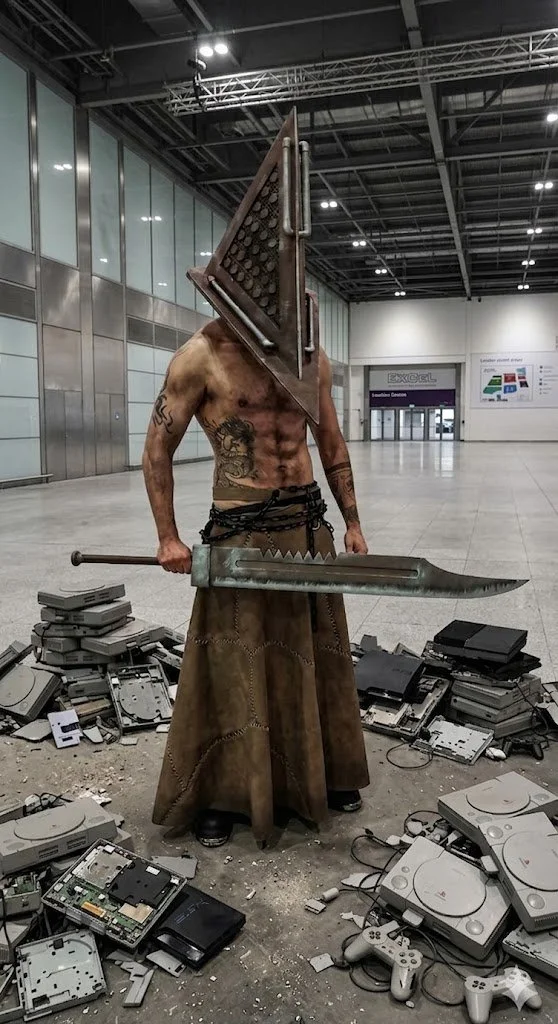
I played four games all of last year: Star Wars Jedi: Survivor, Marvel’s Spider-Man 2, Stellar Blade and Star Wars Outlaws. You might think that I’m saying that I don’t play much, that I’m not a serious gamer. Maybe I’m not. But I played pretty much all year round and those four games were all I needed. I played them to death. So far in 2026 I’ve played Silent Hill 2, Silent Hill F, Silent Hill: The Short Message, and Hellblade: Senua’s Sacrifice and Hellblade 2: Senua’s Saga. That’s a lot of journeying into hell right there.
One major difference between last year and this, the games of last year had a very sandlot open world element to them. There was a story in each, but particularly in the cases of Star Wars Outlaws and Spidey 2, it was fun just being in those worlds and doing things that those worlds offered and for no good reason at all. I’d be caning it like an addict, looking for side missions, and hidden items, trying to complete everything. It’s addictive, but once you’ve found everything there seems little reason to hang around in that place. The good news is, you never find everything. Although, in Spidey 2 I did manage, for the first time ever, to 100% a game. Now that I commit that to print, I’m thinking, that has to be an error. There’s no way I got everything. I’ll just tell myself I did because otherwise I go back in and probably never get out.
Aside from the addictive nature of gaming, those types of games keep you playing long after you’ve completed the main game. The benchmark for the open-world sandlot type game would be Grand Theft Auto Vice City. I have memories of riding a motorbike up and down the beach at night, dressed as Don Johnson from Miami Vice, listening to an 80s soundtrack. Living that through a game was probably better than doing it for real. The idea of it is what we like. There’s less chance of death in the virtual version.
Last year I seemed to constantly have been either swinging through the air in Manhattan, riding a speeder to get away from Storm Troopers, Jabba the Hutt’s bounty hunters and various factions of gangsters on Tatooine. Sometimes I’d be minding my own business and someone would start shooting at me. I think I might have been completing side-missions for all factions, just to keep them off my back, so that I could enjoy discovering random collectables. I even managed to get addicted to Sabaac, the card game of choice for all gamblers in the Galaxy.
It might be facetious to say “addicted.” There’s a fine line between playing something to death and flogging a dead console game. But what keeps anyone in the game that long is the joy to be had simply existing in some place else. And this is without a VR headset.
I have a lot of time for VR, but it is a very different immersion. I played Resident Evil 7 on VR and had to stop and go back to playing it in normal non-VR mode. I had the weirdest nightmares after that. I called it the PTSD simulator after that. This is from someone who loves Resident Evil and Silent Hill, both of which are as creepy as hell.
I think the major difference was that a game like Resident Evil 7 puts you in the position of someone being terrorised. In VR it’s not like you are watching someone being terrorised. It’s happening to you. Minus the pain and real fear. So, when you get tortured it’s a visual simulation to endure. You can say, “Hey, this is what it would look like to get a steak knife in the eye. It’s not so comfortable.” Some worlds and the things that happen, that have to happen for the story to move on, are ones you’re just trying to get through. I have the opposite with Silent Hill. I’ve joked many times that I wouldn’t mind moving there.
When I played the original PlayStation Silent Hill I played it in the dark in a basement flat late at night. It was the perfect kind of creepy. There was a silence to the game that was unnerving but at the same time felt like home. It used that horror trope of taking something normal, something safe and making it otherworldly. The town being shrouded in fog became an iconic part of Silent Hill. When the rust covered decaying Otherworld takes over, I had a sense of relief, a sense of going where we needed to go, where we belong. Harry clearly has issues that need to be sorted out in the Otherworld.
Although there is a path, multiple paths with multiple endings, there is also a freedom in both versions of the town, the foggy reality and the hellish Otherworld, where you can explore. When you are in the Otherworld you occasionally come across what feels like a pocket of reality where everything looks normal but set to a backdrop of rusted hell. One of the moments that stuck with me for years is in Silent Hill: Downpour. You’ve just finished a chase scene, you’ve run from some sort of malevolent essence, never seeing what you are running from, and when you crash into a safe place, at the end of the sequence, you find yourself in a new section. And in that place, you find a sofa sat on a carpeted area and you find a gramophone playing the Matt Monro classic Born Free. It feels like an overlap where hell meets the world. As you’ve just escaped one thing, and you know how games work and that you get a moment of respite, the scene feels safe, eerie and comforting, if not an entirely comfortable place.
The interesting aspect to me is that the sandlot open-world type games give you a world to run around in long after you’ve finished the main story. If you read a book, watch a film or TV series, they may stay with you, but you don’t stick around in the background. You don’t essentially move in. That’s testament to the world that’s been built for you and the characters that inhabit that place.
Having recently played the Hellblade Senua games, Senua’s Sacrifice and Senua’s Saga, I felt like I was on a guided walk through hell. It’s not as much a playable game as it is an interactive story. You’re only ever going to get through it and never find a time or a way to linger. If you play the Senua games with headphones on you can actually get the full experience of hearing those voices in your head that Senua hears. Senua’s journey through hell is too guided for it to be remembered as a great game. It sits in an odd position where it isn’t quite story enough and it isn’t quite game enough. It’s a character simulator, complete with voices in your head. We’ve gone from inhabiting a world to inhabiting someone’s head.
When it’s done best, my type of games can have you occupy the world you move in whilst being one step removed from the protagonist you’re controlling and yet feeling every moment with them. The Last of Us does this better than any game. The script was so good that they hardly rewrote it when they transferred it from game to TV series.
The key thing is that every choice, every interaction, pulls you more into the game and the story. Does it matter if you do certain things? Sometimes not. But it definitely enriches the game, the story, the characters. The story will go where it goes, but you can get there a number of ways, and the more invested you become in these people, the more you get out of the ending. It’s intense anyway but you’re going to feel it more if you’ve had the time to get to know these people and their world.
What I do know is that if you spend enough time somewhere, you miss it when it’s gone, and you can come back, but it’s not the same. You can never go there for the first time ever again. Suddenly I’m reminded of the time I was reading Wuthering Heights on the Tube, and a lady asked me if I’d read it before. When I said that it was the first time I’d read it, she said that she envied me, and she wished she could read it for the first time again. I guess the conclusion I’m drawing is that fiction, in all its formats gives us a landscape to walk around in, even if that landscape is hell.
Where next?
→ If you want to explore why some fictional worlds stay with us long after we've left them, Once a Geek, Always a Geek
→ If you want to see how stories can make us fall in love with places, people and lives we've never actually lived, I Have Never Carjacked Anyone
→ If you want to understand how memories can turn moments into places we keep returning to throughout our lives, You Saw Chuck Weatherspoon
If the writing resonates, stay with it.