
The beauty and power of words part 7: When is the perfect time to write?
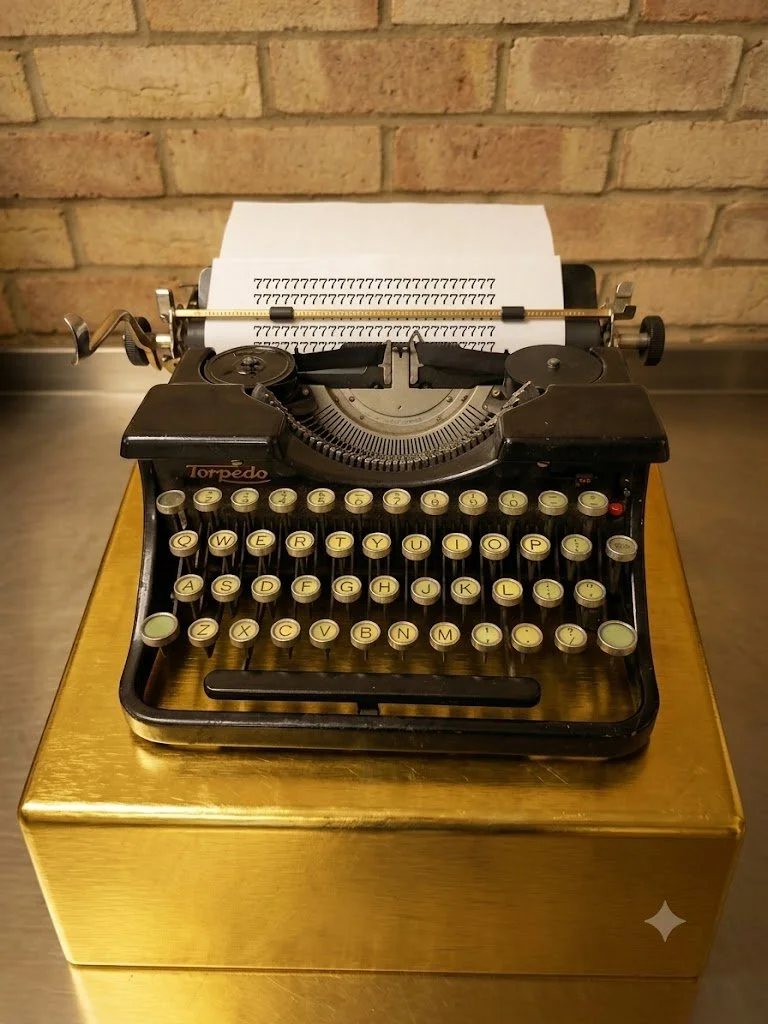
I’m never short of something to write. This does not stop me from asking myself what I want to write next. There’s a particularly dangerous mindset where you ask yourself what you’re in the mood to write. I used to do that a lot. I used to wait for the right environment, when no one was about to ruin the moment, when I was in the zone. I can only advise that if you wait for that moment, you will find that you might be the most creative thinker you know of, but you actually don’t get much writing done.
It took me a while, but I did finally reach a point in life where I realised that if you write then you can do it anywhere and there is no one perfect environment for it. There’s only the moment you start scribbling or tapping on your keyboard.
Expressing the feeling, making metaphors out of it, understanding what it is about the feeling that you want to get across to yourself and the reader, that all comes together as you write. You’ve written parts of it in your head already. You’d be amazed at how, when you start writing it takes you places, you feel it, you don’t go looking for the mood because it finds you. You read lines back to yourself and you feel the emotion that you’ve put into the work. It might not even be the emotion you thought you were going to write. But you’re writing and it sure beats sitting around waiting for the right mood to hit you.
In the name of myth-busting, I can also say that the best time to write is never when you’re wasted.
“But drink and drugs make you more creative.”
“Nope. Speaking from experience they don’t.”
They make you Inhibitionless and if you’re a creative type you might think and act more creatively. But if you’re not the creative type, you’re just plain drunk, maybe rambling, maybe overly emotional, maybe itching for a fight when buying a late-night kebab. Why is it always where you buy the food that fights start?
I was listening to a story about how one guy from work really liked to party. I was told how at his leaving party he bought tequila shots for everybody. And he himself must have had about ten. I stood there waiting for the punchline. It never came. “I did ten shots of tequila” is not a story. “I did ten shots of tequila and fought a bear.” That’s a story. If you’re the literary type, you’d go for, “I did ten shots of tequila and fought Lord Byron’s bear.”
If you’re going to do drunken stories, then at least make them stories. “I did ten shots of tequila and then went for a midday walk and on walking past my friend Scott’s house, seeing the window open, I decided to first knock on the window, and then when there was no response, the only sensible thing to do was to climb up and clamber through the open window and fall into Scott’s flat. Once in the flat it was, “Yay! I’m in Scott’s flat! What now?” Fearing that all drunken imagination was used up, I thought to myself, “What’s the point of this?” So, I came up with an idea, a rather creative one. I took my battered pair of trainers off and swapped them for a nice pair of Scott’s shoes. And I found a pen and a piece of A4 and scribbled down the following, “You don’t really know someone until you walk in their shoes.” I put my battered old shoes on the piece of A4 and then I went to leave, only to find that it was the sort of flat you needed a key to get out of. Clambering back out the window seemed harder than clambering in. I had to get on to the kitchen work top and squeeze through the open window. As I was falling out of the window, for all of the residents of Constantine Road to see, I thought to myself that, if caught, I was going to have a hard time explaining this one.
One version is a creative drunken tale. The other is counting how many drinks someone had. The creativity is there. You don’t need intoxication to get to it. You need to write and that’s really difficult when your executive functioning is seriously impaired.
I know there’s the Hunter S. Thompson mode that everyone thinks is achievable. The reality is that Thompson probably wrote hungover more than he did high. From reading his letters, published in the early 2000s, I think of him spending most of his time writing to beat a deadline with an editor standing over his shoulder. He still had to put in the time.
The other great myth that needs busting is that you’re not depressed enough to write. Again, start writing and then you’ll dig into some of your depression reserves, frustration too. You’ll also stumble across beauty and power.
There is a sense, and I tend to agree with this, that all the best stories are the sad ones. Shakespeare’s Tragedies are his best plays. Every Russian novel seems to end in misery. Even the best kids stories are pretty bleak. Grimm Fairytales anyone? There’s even a melancholy feeling when you hear Kermit’s cousin Robin singing “Halfway up the stairs.” I think there’s an idea that sad, melancholy tales of woe are serious stories and therefore good. And how can I write that if I don’t get into that headspace? Just like being as intoxicated as Hunter S. Thompson or Ernest Hemingway, you write about the memory of the feeling, the memory of how sadness felt.
As an aside, funny is much harder to pull off than serious. The actor Christopher Eccleston gave the best ever happy Scrooge in Dickens’ A Christmas Carol. Grumpy “bah-humbug” Scrooge is the easier to play. Happy, “I’ve seen the light” Scrooge can often be a bit cringe if you ask me. Eccleston did the most amazing job of being the happy Scrooge. It was still over the top but he somehow managed to make it seem genuine in a way I’ve not seen before. So, gloomy and dark and melancholic is not always the best work. And sometimes I’ve actually found myself going into a piece with one intent and coming out with an unexpected result.
I would never ever suggest that mood is not part of the process. You don’t write in a vacuum. You bring your baggage. You bring other people’s baggage. You borrow baggage and you still feel the weight of it. Waiting for a headspace that may never come along is not writing. I’m never short of ideas. I’m never short on something to write about. I think that’s the essence of writing right there. I’ve had a space opera of a comic book story inside my head since 1992. Maybe one day I’ll write it. But it does let me be grandiose and put my tongue in my cheek and say that I have a whole Galaxy of ideas to fall back on. I don’t go looking for mood anymore. I look to write and then once you get going it takes you wherever it takes you. Strangely, in asking myself what I should write next, I wrote this. I didn’t know what mood I was in. I knew I wanted to write. The words and tone both came along at the same time.
Liked this? Read the rest of the Series Here.
Where Next?
→ If you want to explore why writing is worth doing before worrying about when to do it, In an Age of Texting, Why Write?
→ If you want to explore how writing can help us understand a moment long after we've lived it, Not Gary Clark
→ If you want to see what this way of writing looks like in practice, following an ordinary idea wherever it naturally leads, Bicycle versus Automobile
If the writing resonates, stay with it.