
It’s getting tense in here.
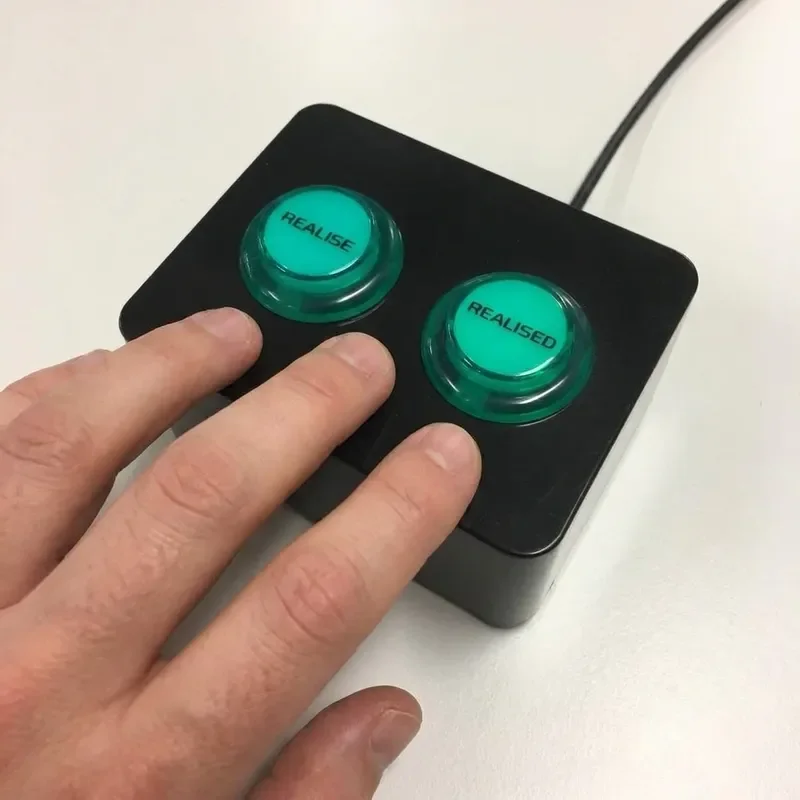
I’m writing notes on what it is about the tenses that bugs me. I wasn’t trying to be a literary anarchist here, when I say this, but I found myself saying, this isn’t that easy.
I’m not mean but part of me hopes that English teachers have just a small coronary when reading that opening line there. I’m not wishing death on anyone here. I’m right there in the ambulance with them and when they come around, I’m right there when they want to tell me how mixed my tenses were. I’ll say, “Does it sound good though? Did you understand what I’m saying?” Most importantly, I’d ask if they feel that a reader would be knocked off their stride reading it. Only if the answer, hand on heart, was yes, then I’d be saying I’d edit the offending words.
I think you can understand all of that. I’m not sure it flows as well as I’d like. So, here’s another shorter and far more practical example of what I’m trying to do: "He was walking along and thinking, and it comes to mind that he's in trouble."
We start off in past narrative and then jump to present tense. And I don’t think your brain cares. English teachers and editors will. That’s what they get paid for. But genuinely, the sentence, written with all the right tenses in place, is not the same sentence. It’s not the same sound.
"He was walking along and thinking when it came to mind that he was in trouble."
"He was walking along and thinking, and it comes to mind that he is in trouble."
If you want to tell me that you noticed the difference but those differences barely registered until I pointed it out, then the change in tense didn’t do anything to your conscious reading of it. If you understood what’s being conveyed and didn’t even stop to think of whether the writer should have said, “he was in trouble” or “he is in trouble,” then you are probably not armed with a red marker pen and looking for grammar to correct.
I had a hard time getting a single tense shift past any postgraduate students when we were reviewing each other’s work. I blame Lethal Weapon for all of it. This is all Mel Gibson and Danny Glover’s fault. Although I remembered the wording differently, it was this exchange that seemed to set up my young way of thinking.
Someone was in bed with Amanda Hunsaker the night she died.
Right. Up to now, we assumed it was a man.
Okay. Suppose it was Dixie.
Okay. Disgusting, but okay. Let's say Dixie put the drain cleaner in her pills.
Say someone paid her to do it.
Sure, she thinks, fine, Amanda swallows a couple downers and she's dead. Then Dixie...
If it was her.
If it was her. She's got plenty of time to spritz the place up and get out. Whatever.
Except Amanda jumps out the window.
Or Dixie pushes her. You know, either way.
Either way. She has to make a quick exit because the body's public. So she hauls ass downstairs.
People are coming out saying, "What happened? What’s happened?"
Somebody spots her. She says, "Shit!"
That's right, she actually stops and says, "Shit!"
The point being that now she has to cover her ass.
Right. So she grabs the nearest flatfoot she can find and says, "Officer, officer, I saw the whole thing".
Right.
Right.
Nah. That's pretty fucking thin.
That's very thin.
What the hell. Thin's my middle name.
Your wife's cooking, I'm not surprised.
What I falsely remembered is the idea that Riggs and Murtaugh are talking in one tense and then switching to another. I had in mind that the whole conversation was “Amanda was doing this and Dixie was doing that,” and then there’s a shift to “She says shit” and it felt like they were no longer talking about what had theoretically happened, but what was happening. Dixie is there and she’s saying, “Shit.” But my memory got it wrong. Not the essence of it though, just that it wasn’t about a change of tenses, but rather just a shift that takes you from observing the scene to being in it.
In class though, it was always picked up as incorrect grammar. One wonderful piece of irony is that other MA students had asked how I make things sound so good, but then wanted to point out where I’d gone wrong with the tenses. The answer is not that tenses don’t matter. “I am interesting in talking to you” should be “I am interested in talking to you.” That’s blatantly going to jar when you read it. Get out your red pens now. I’ll allow you that one.
The key test is always going to be how it sounds. My answer to how I make things sound good is simple. I read my work out loud when I edit it. If I read a sentence and it sounds like a car sputtering, I know it’s not right. Sometimes it’s the smallest tweak here or there that makes a difference. Performance beats grammar every time. If it works, then I can’t see a problem. I think I know that the voice of any writing, the sound of it, the feeling, is more important than anything else.
I’d never say that there isn’t a place for perfect prose. Sometimes writing can be the type of language that you will only find in books. That in itself is something amazing about storytelling. What I am strongly advocating is that there are many ways to write, and each way of writing can do its own thing. What’s right for one piece may not be right for another. We run towards the things we like the most, and I do think that the complex ideas, strange thoughts, and questioning attitude that I like, best fit a conversational tone. That’s something that I like, and it’s always arrived with mixed tenses. (Is that mixed or not? You decide. Then decide if it struck a chord because of how it sounded when you read it).
It’s not just about being the voice of the people. It’s not like I want to write like normal people talk. My vernacular comes from a life of movies and memorable stories. It comes from how something resounds with me when I read it or see it. And I just know that if you changed a word here or there the beauty and power of that moment folds in on itself and collapses.
(I cannot leave it unsaid here that in the last two paragraphs there are two examples of how some things seem to only be able to exist in writing. “We run towards the things we like the most,” just popped into my head. Maybe it’s a term I’ve heard before. Maybe it’s someone’s philosophy, and even if it isn’t mine, it’s for anyone to borrow. I don’t think it’s the way people would say things down the pub. The other one was “My Vernacular.” That’s something I say. I don’t know why. I’m not trying to be clever or cash in on as many big words before I die. And I use that word in real life too. It’s not big and it’s not clever. But it sounds a hell of a lot less clunky than, “My way of saying things.” The more formal sounding word in this case is actually better for saying what I wanted to say).
Consider this though: “Barry Sanders starts running right and stops on a dime. And then he just took off in another direction. Rodney Peete has his hands in the air signalling touchdown and Sanders still had three guys to beat.”
Forget grammar for a moment and tell me you understand what happened. The key thing is that you didn’t consciously understand what was going on in your head, nor did I write it thinking about how it would play out in your head. You were there though. And part of me doesn’t want to explain how you felt what you felt, how you saw Barry make the move and how his quarterback Rodney Peete is forever there with his hands in the air. I’m happy to know you were, and are, along for the ride.
Knowing that there is a momentary step back from what we’re seeing, quickly followed by once again being right next to Rodney Peete as he celebrates the touchdown, long before Barry scores, does not help us enjoy the experience. It actually detracts from it when all you want is to be in the moment.
People can say: “So I'm in this pub, right, and this bloke comes over...” Nobody interrupts to say, "Excuse me. I think you meant that you were, as in past tense, in the pub." We think nothing of it. It’s part of a storytelling voice. To make it grammatically correct can be to make it sound wrong.
At this point I need to step off and point out that the message, if there is one, is not, “Good writing doesn’t need good grammar.” What I am asking is: What does the writing do to you? What comes to mind when you read this?
It is estimated that Bogdan Cherevin drank three standard bottles of vodka (although urban myth has it listed as five or six). His size can be considered a major contributing factor in his survival. At eighteen stone he is regarded as a man who could hold his drink. He had been laid off from his factory job earlier that day and started drinking from the moment his last shift ended. He later said that he was very upset to lose his job but realises that he had surpassed everyone’s expectations when it came to drowning his sorrows. Unsurprisingly, he could not remember how he came to have drunk so much and appreciates that he is lucky to be alive.
I’m thinking that the first thing that comes to mind when reading that is: How much vodka? I can’t even comprehend how anyone would focus on whether or not it should read “realised” and not “realises,” in “…later said that he was very upset to lose his job but realises that he had surpassed everyone’s expectations.” Seriously? That’s what you take away from that? My test has always been how anything sounds. I don’t ask about right and wrong. I ask, “Does this sound right?” As ever, the words have the final say. I think I certainly benefit from never being properly taught the rules. They were never drilled into me well enough so that I was fixated on grammar for the sake of grammar. I’d heard people say, “Shakespeare says…Dickens says…Dostoevsky’s point is…” And I didn’t once say, “How can these people be saying anything if they’re dead?” Neither did I argue that I needed clarity regarding whether we were really referring to what Shakespeare’s work says or what Shakespeare the man had said. I read the words. I heard them and didn’t need to know to fully understand. My mind fills in the blanks, forms connections, makes assumptions, ones that I know could be right or wrong. But I’m happy to go along for the ride. Who knows? I could be wrong and in the next paragraph, where I had assumed “Dickens says” was a reference to what he says in his writing, only to find that I’m reading a story about the ghost of Charles Dickens, and he is actually saying something.
Dostoevsky says that life is better in books.
Dostoevsky says that he’s going to eat your brains because he’s now zombie Dostoevsky.
Wow. I wasn’t expecting the latter but now I’m intrigued. “Dostoevsky says” re-imagined. Sooner rather than later the text is going to give you the answer, if the answer isn’t what you’d normally expect. Otherwise, your brain usually takes you to the right place and doesn’t even think about what tenses should be used. Chalk this up to another case of: You do not need to understand everything. Go with what you think is going on. You’re usually right and if you’re wrong, you can happily be wrong when you realise that zombie Dostoevsky really is talking.
People wonder why blokes don’t read literary fiction and maybe it’s because voices get flattened by insistence on precise grammar. Sometimes readers might want a more human voice and not such a literary one. Personally, I try to combine both and I can’t see any reason not to. Constant adherence to one or the other gives the writing a flat sound to it. If I were researching it, I would be keen to see what type of language is more readable to anyone who wasn’t naturally drawn to general literary fiction. Perfect grammar probably wouldn’t be high on the list of things certain readers might look for.
I'm thinking of Dostoevsky, where he says, “life is better in books.” And I think of how I see that there's an invisible membrane between fiction and reality where we model ourselves on fictions. Tell someone to "sit still and look moody" and they will think of a scene from film, TV show, play or music video. We use narrative in our daily lives. Some of the language of narrative plays out in real life and some real life gets injected into the narrative. Fiction imitates life and life imitates fiction and quickly life becomes about copying certain representations of reality, to the point that we don’t know if we do what we do because it’s how we do it or because we’ve spent our lives watching people in stories do it that way. How you do anything, or how you write anything, all comes down to the voice you’re creating. Grammar can be wrong, but the voice can still be right.
Try this:
A man walks into a bar with his Giraffe. He sits down and has a pint. They stay for all of one drink and then get up to go out. The giraffe collapses to the floor. The man looks at the giraffe and shakes his head and simply walks out. He knows the giraffe will find his own way home eventually. As he’s leaving, the barman says, “Oi. You can’t leave that lying there.” The man turns to him and looks at his collapsed giraffe and says, “That’s not a lion. That’s a giraffe.”
Questions you could ask: Who is the man? When you say, “he sits down and has a pint” do you mean that the man does or the giraffe does? You say, “as he’s leaving, the barman says…” Is the man leaving or the barman leaving? If you asked any of these questions, then you have a scary commitment to grammar.
Everyone’s role in that old dad joke is to play their part to get us to the punchline. Understanding is deferred to the punchline. And then you get an answer. I’m at war with the idea that complete understanding is a prerequisite for any experience. It’s that type of thinking that stops people trying anything that they think they don’t understand. Trust me when I say that I enjoyed Madam Butterfly even when I had no idea what was going on. Understanding is good. It’s great. But it’s not everything.
Here’s another:
“Oh well. Tolstoy says that manual labour is good for the soul.”
“As Tolstoy once said, manual labour is good for the soul.”
Essentially, what we’re saying, in whichever tense you choose, is that some really clever bloke, the one that wrote War and Peace, he wasn’t opposed to some manual labour. He even thought that it can be good for you. We trust the reader. If we were to say down the pub, “Tolstoy says that manual labour is good for the soul” I’m wondering how many people would say, “Where’s this Tolstoy guy live? I want a word.” Even if you’d never heard of him, I’m sure you’d think, probably some smart bloke, what with people quoting him all the time.
Accrediting Tolstoy does lend weight to what you’re saying. Referring to any individual usually comes with baggage. “Einstein says…” is going to make people understand more than “John in the darts team says…” Which, in turn, is different from “John in the darts team said.” One implies John’s philosophy, and the other states that something was said.
This whole line of thinking came about when I was editing something and spellcheck picked up a grammatical error where I didn’t. And the reason I didn’t even see it as an error or bad grammar is that it sounded right. I thought of how I can be told when something is wrong, and I know it’s technically wrong, and yet it doesn’t seem wrong at all to me. What exactly is "wrong" supposed to mean in writing? Is wrong the same as bad? Worse? What’s it say if you know you’re wrong and you don’t correct it, you can’t bring yourself to correct it, because you like the version that’s supposedly wrong? I can only stick to my guns and say – read it out loud. If it sounds how you want it to sound, then stay with it. Think about how what you are saying is changed for the sake of being grammatically right. You hear it? You hear how you like it? Others will too. And, in turn, others might take a red pen to every tense they happen to spot that doesn’t comply with their universal laws of grammar.
Please note that this article was written with the aim of making you work overtime with your red pen. If you have any ink left you’d have let me know, right?
Where next?
→ If you want to see what happens when we stop worrying about whether we understand something and just go with it, Understanding not necessary
→ If you want to step into nineteenth-century Russia without worrying about whether you understand everything, Welcome to nineteenth-century Russia, please walk around, even if it does all seem baffling
→ If you want to see what I mean when I say that writing is its own language, The beauty and power of words Part 3: Writing is its own language
If the writing resonates, stay with it.